Author: waictanet

  • Breaking Barriers, Building Futures: WAICTANet Launches “WiGTech-MRU” to Empower Women and Girls in Technology Across the Mano River Union

    In a region where fewer than 20% of ICT professionals are women, the West Africa ICT Action Network (WAICTANet) is taking bold steps to close the digital gender divide with the new groundbreaking initiative — the Women & Girls in Technology (WiGTech-MRU) program.

    Spanning Liberia, Sierra Leone, Guinea, and Côte d’Ivoire, WiGTech-MRU is designed to empower women and girls through digital skills development, innovation, entrepreneurship, and leadership opportunities, positioning them at the forefront of West Africa’s digital transformation. “WiGTech-MRU is not just another project — it’s a unique platform. We are creating pathways for women and girls to lead in technology, innovation, and digital policy across the Mano River Union,” said Peterking Quaye, Regional Director of WAICTANet. “Through training, mentorship, and opportunity, we are transforming potential into leadership and lasting impact.”

    The initiative aligns with the AU Digital Transformation Strategy (2020-2030), ECOWAS Gender Policy, and the UN Sustainable Development Goals (4, 5, 8, and 9), while supporting national digital-inclusion strategies in the MRU countries. The West Africa ICT Action Network (WAICTANet) is a regional multi-stakeholder platform advancing inclusive digital transformation and governance across the Mano River Union (Liberia, Sierra Leone, Guinea, and Côte d’Ivoire). Through policy advocacy, research, and capacity-building initiatives, WAICTANet promotes access, innovation, and digital rights for all.

    WiGTech-MRU logo and website, symbolizing the beginning of a coordinated effort to empower women and girls across borders. “This initiative represents more than empowerment—it’s about inclusion, leadership, and economic resilience,” noted Claudette Abigial Walker, WAICTANet-Women & Media Programs Lead “For the first time, I see a regional platform built to help women like me scale our digital innovations.” Program Focus and Vision -WiGTech-MRU will operate on four strategic pillars:

    1. Digital Skills Accelerator – Training in coding, cybersecurity, AI, and data literacy for young women and girls.
    2. Women in Innovation & Entrepreneurship Fund (WiIEF) – Seed funding and business incubation for women-led startups.
    3. Mentorship & Leadership Network – Connecting established ICT professionals with emerging female innovators.
    4. Women in Digital Leadership Forum (WIDLF) – An annual policy and advocacy dialogue promoting gender-responsive digital frameworks.
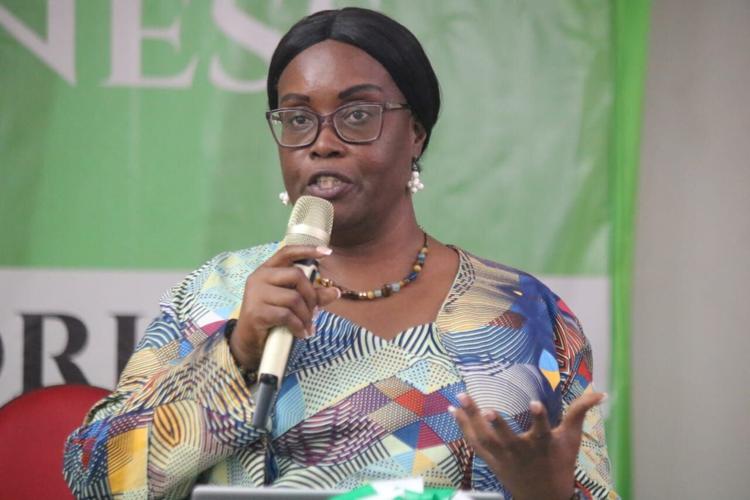
  • WAICTANet’s Peterking Quaye Urges Journalists to Embrace AI-Aware Fact-Checking at Local Voices Liberia Symposium

    As misinformation continues to threaten democratic discourse, the West Africa ICT Action Network (WAICTANet) joined journalism students and media professionals for a timely conversation on truth and technology during the Fact-Checking Symposium for Journalism Students, held at the Liberia Learning Center in Paynesville City. The event, organized by Local Voices Liberia, brought together students, editors, and civic-tech leaders under the theme “Stopping Disinformation to Enhance Democracy – What Students Need to Learn.” It aimed to equip the next generation of journalists with practical verification skills, AI awareness, and digital tools to identify and combat misinformation.

    Representing WAICTANet, Peterking Quaye, the organization’s Director of Programs and Projects and a Certified AI Governance Expert, served as one of the two main panelists. With over 15 years of experience in digital transformation, AI policy, and civic technology, Quaye urged aspiring journalists to approach their profession with both curiosity and critical digital literacy. “Fact-checking today is not just about detecting lies; it’s about understanding the technology behind how those lies spread,” said Quaye. “Artificial Intelligence has changed the information landscape. Journalists must now learn to verify not just sources, but also the algorithms, images, and AI tools shaping public narratives.” He called on journalism students to embrace digital literacy as a core professional competency, emphasizing that combating disinformation requires both technical skill and ethical grounding.

    “Technology can amplify misinformation, but it can also amplify truth — if used wisely,” Quaye noted.
    “Our mission at WAICTANet is to empower journalists, innovators, and women to use technology as a tool for transparency, education, and good governance. ”Quaye expressed deep appreciation to Local Voices Liberia for the invitation and partnership in fostering a culture of accountability and responsible information sharing in the digital age. “We are sincerely grateful to Local Voices Liberia for providing this platform,” he said. “Building a generation of fact-checkers and ethical journalists begins with opportunities like this — where students learn that truth and technology must coexist for democracy to thrive.”

    The symposium also featured Hannah N. Geterminah, Co-founder and Chief Editor of The Stage Media (TSM) — Liberia’s first fact-checking institution and a signatory to the International Fact-Checking Network (IFCN). Together, both panelists guided participants through practical exercises, verification tools, and real-time case studies on detecting misinformation online.

  • Official Statement by the West Africa ICT Action Network (WAICTANet) on the Passage of the Liberia Cybercrime Act

    The West Africa ICT Action Network (WAICTANet) welcomes the historic passage of the Liberia Cybercrime Bill into law by the Liberian Senate on Tuesday, November 4, 2025. This landmark legislation represents a defining step in the country’s effort to secure its digital future and safeguard citizens, institutions, and businesses from the growing threats of cybercrime.

    The new Liberia Cybercrime Act provides a comprehensive legal framework to prevent, investigate, and prosecute offences such as identity theft, online fraud, cyber harassment, child exploitation, and unauthorized access to computer systems. It also introduces mechanisms for handling digital evidence, international cooperation, and the protection of critical information infrastructure, aligning Liberia with regional and international best practices. This achievement situates Liberia among the progressive African nations implementing the African Union’s Malabo Convention on Cybersecurity and Personal Data Protection and fulfills part of its commitments under the ECOWAS Directive on Fighting Cybercrime and the United Nations Convention against Cybercrime (2025). WAICTANet acknowledges the collaborative role played by the Ministry of Posts and Telecommunications, the Liberia Telecommunications Authority (LTA), and diverse civil society actors in shaping this legislation through stakeholder consultations and policy dialogues.

    For over five years, WAICTANet has championed rights-based digital reforms through public education, capacity-building, and advocacy on cybersecurity governance. The passage of this Act reflects the tangible impact of such multi-stakeholder engagement and the importance of civic participation in national digital policymaking. While this is a welcome achievement, WAICTANet emphasizes that cybersecurity must advance in harmony with human rights and democratic principles. The implementation of the Act must therefore be proportionate, transparent, and rights-respecting.

    To achieve this, WAICTANet urges the Government of Liberia to ensure that the implementation of the Cybercrime Act is grounded in accountability, transparency, and respect for fundamental freedoms. This includes integrating Human Rights Impact Assessments (HRIAs) into enforcement processes, establishing an independent Cybersecurity and Data Protection Commission, and guaranteeing judicial oversight in investigative and prosecutorial procedures. It also calls for the protection of freedom of expression and privacy in digital spaces, alongside continuous engagement with civil society, academia, and the private sector to monitor implementation and inform ongoing policy review.

    “This Act is not just a legal instrument—it is a social contract for a safer, freer, and more trusted digital Liberia,” said Peterking Quaye, Regional Director of WAICTANet. “Our next task is to make sure that its implementation strengthens human rights, enhances accountability, and builds digital trust across every community.” WAICTANet will continue to partner with national institutions, development partners, and regional stakeholders to support capacity-building for law enforcement, digital rights awareness, and cybersecurity education.

    As part of its #CyberSafeLiberia campaign, WAICTANet will host a national policy dialogue later this year under the theme “Human Rights and the Cybercrime Act: Building Trust in Liberia’s Digital Future.” WAICTANet calls on all stakeholders — government, private sector, and civil society — to collaborate in ensuring that this law becomes a force for digital empowerment and human dignity, not surveillance or repression. Together, Liberia can demonstrate that it is possible to fight cybercrime while upholding freedom, privacy, and inclusion. The West Africa ICT Action Network (WAICTANet) is a regional multi-stakeholder platform promoting inclusive digital transformation, cybersecurity governance, and data protection across the Mano River Union (Liberia, Sierra Leone, Guinea, and Côte d’Ivoire).

  • Commissioner Angelique Weeks Calls for Digitally Aware Generation at Liberia’s Cybersecurity Awareness Symposium……………………. LTA Commissioner honoured as “Cybersecurity Awareness Champion 2025” during national youth cyber event in Monrovia

    Delivering a powerful message at Liberia’s flagship youth cybersecurity event, Commissioner Angelic Weeks of the Liberia Telecommunications Authority (LTA) called for greater investment in digital skills to build a “cyber-aware generation” capable of protecting Liberia’s growing online ecosystem.

    Speaking as On behalf of the Commissioner Shadrack Tougbay, International Gateway Team Member as Special Guest of Honour at the 2nd Youth Cybersecurity Awareness Symposium, hosted by the West Africa ICT Action Network (WAICTANet – Liberia Chapter) in partnership with the Ministry of Posts & Telecommunications, Commissioner Weeks underscored that cybersecurity is central to national development. “Cybersecurity is no longer an afterthought; it is central to our nation’s digital transformation and economic resilience. The youth of Liberia must become our first line of defence — guardians of trust, innovation, and integrity in the digital age,” she stated. “The LTA is proud to support this initiative that blends education, awareness, and empowerment.” The Commissioner was represented by Shadrack Tougbay, International Gateway Team Member, who read her address on her behalf.

    In recognition of her leadership in advancing national digital-security policy, consumer protection, and youth inclusion, WAICTANet presented Commissioner Weeks with a Special Citation of Honour, naming her “Cybersecurity Awareness Champion 2025.” Presenting the award, Peterking Quaye, Regional Director for Programs & Projects at WAICTANet, said, “Commissioner Weeks’ commitment to empowering young people and securing national infrastructure reflects Liberia’s readiness to lead the Mano River Union region in digital resilience.” The symposium trained over 200 students and young professionals from Monrovia and Paynesville in cyber-hygiene, social-media safety, data protection, and responsible online conduct. Nearly half the participants were young women, emphasizing gender inclusion in Liberia’s emerging cybersecurity workforce.

    “This event showed us how to protect our data and report scams — skills we never learned in school,” said Faith Wreh, a student from Paynesville Community School. The initiative aligns with Liberia’s Digital Transformation Agenda and the ARREST Agenda (Accountability, Reform, Security and Transformation), as well as the ECOWAS Cybersecurity and Cybercrime Strategy and the African Union Data Policy Framework, both of which prioritize youth participation and cross-border cooperation. With internet penetration in Liberia now reaching 32.4 percent (as of early 2025) and cyber incidents across West Africa increasing by over 30 percent annually, the symposium coincided with Global Encryption Day 2025, amplifying calls to protect strong encryption as a cornerstone of privacy, trust, and innovation.

    As a member of the Global Encryption Coalition, WAICTANet joined more than 70 organisations worldwide in advocating encryption as essential to a safe digital economy. “Liberia cannot build a digital economy without digital trust,” Quaye added. “Our youth must understand that every secure password, every cautious click, and every encrypted message contributes to a safer nation.” Commissioner Weeks pledged the LTA’s continued collaboration with WAICTANet, and educational institutions to expand youth-focused cyber-education programmes nationwide in 2026.

    WAICTANet, for its part, announced the roll-out of the Youth Cyber Ambassadors Network (YCAN – Liberia) — a student-led initiative that will establish cyber clubs across all 15 counties and promote peer-to-peer awareness in schools and communities. The West Africa ICT Action Network (WAICTANet) is a regional civil-society platform promoting digital inclusion, data-governance reform, and cybersecurity awareness across the Mano River Union and ECOWAS region. WAICTANet works with governments, youth groups, and private-sector partners to strengthen digital trust and empower communities through responsible innovation.

  • Hon. Charles Umehai: Championing Energy Access as the Backbone of Liberia’s Digital Future

    Monrovia, Liberia — 23 October 2025.
    As Liberia accelerates its national digital and financial inclusion agenda, one key figure continues to bridge the gap between policy, innovation, and sustainable development — Hon. Charles Umehai, Deputy Minister for Energy at the Ministry of Mines and Energy (MME). His confirmed participation at the 3rd Liberia Digital & Financial Inclusion Roundtable 2025 reflects a powerful shift in national thinking: that energy access is not merely an infrastructure goal, but the cornerstone of digital inclusion, innovation, and economic equity.

    Hosted by the West Africa ICT Action Network (WAICTANet) under the theme “Energy Access & Clean Power for Digital Equity,” this year’s Roundtable — held at the ICON 16 Hall, Orange Digital Center Liberia — unites government leaders, private innovators, youth advocates, and international partners to address one of Liberia’s most pressing challenges: ensuring that every citizen has access to reliable, clean power and the digital tools that drive opportunity. Liberia’s electricity access stands at approximately 32.5%, with rural electrification below 10%, limiting connectivity, mobile money operations, and digital learning. As Deputy Minister for Energy, Hon. Umehai has been instrumental in steering energy sector reforms aimed at expanding renewable and decentralized power solutions — from solar mini-grids to public-private energy partnerships. His leadership reinforces the growing recognition that digital inclusion cannot thrive without energy inclusion.

    The Liberia Digital & Financial Inclusion Roundtable has evolved into a national platform for policy review, advocacy, and partnership building, linking ministries, regulators, and innovators. The 2025 edition, following the successful Sierra Leone Roundtable earlier this year, introduces the Liberia Digital Inclusion Scorecard 2025–2026 — an accountability framework tracking progress on renewable energy integration, fintech inclusion, and digital resilience. “Hon. Umehai’s presence this year signals government’s active commitment to integrated development policy,” said Peterking Quaye, Regional Director of WAICTANet. “Energy access is no longer a side issue — it is the catalyst for digital transformation and national growth. This dialogue helps align energy and digital policy for measurable impact.”

    Hon. Umehai’s engagement also highlights Liberia’s participation in broader regional frameworks such as ECOWAS’ West Africa Power Pool and the Mano River Union’s Clean Energy and Digital Integration Agenda. These cross-border efforts are vital to ensuring that energy reform and digital access evolve hand-in-hand across the region. By positioning energy at the center of digital transformation, Hon. Umehai and the MME are helping Liberia transition toward a sustainable, tech-driven economy. His participation in the “Energy Access & Clean Power for Digital Equity” panel will help chart actionable strategies for improving power reliability, enabling fintech growth, and bridging the rural connectivity divide.“This year’s Roundtable represents a moment of alignment — where energy, technology, and finance converge to define Liberia’s future,” said Peterking Quaye. “The Ministry of Mines and Energy’s participation sends a clear message: that clean power and digital equity are inseparable pillars of inclusive growth.”

    As Liberia advances toward universal energy access and a robust digital economy, partnerships between government, the private sector, and innovators like WAICTANet remain crucial. The presence of policymakers such as Hon. Charles Umehai ensures that the national dialogue moves beyond ideas to implementation — shaping reforms, guiding investment, and creating lasting impact.

  • “Digital empowerment is not optional—it is the lifeline for inclusive development in Liberia and the Mano River Union region.”– Peterking Quaye, Regional Director, WAICTANet

    As the world celebrates World Telecommunication and Information Society Day (WTISD) 2025, the West Africa ICT Action Network (WAICTANet) joins the global community in commemorating 160 years since the founding of the International Telecommunication Union (ITU). This year’s theme, “Bridging the Gender Gap in the Digital World,” is a timely and urgent call to action for governments, development partners, and civil society in the Mano River Union (MRU) region.

    In Liberia, only 26% of the population has access to the internet (World Bank, 2023), with women and rural communities disproportionately disconnected. The digital gender gap continues to widen due to limited access to devices, low digital literacy rates, and inadequate infrastructure in rural and marginalized communities. In contrast, Sierra Leone and Côte d’Ivoire have made significant strides, with internet penetration at 39% and 47% respectively, and national strategies supporting women in tech and digital entrepreneurship.

    WAICTANet is deeply concerned about Liberia’s slow progress in integrating digital technologies into national development frameworks. Empowering women and girls through ICTs is not just a development priority—it is a fundamental right and a powerful catalyst for economic and social transformation.
    A Thought Leadership Message from the Director, Peterking Quaye “WTISD 2025 offers us a platform not only to reflect but to act. The MRU region, particularly Liberia, cannot afford to be left behind in this digital age. As we mark the ITU’s 160th anniversary, we must also mark a new beginning for inclusive connectivity. The government of Liberia and the Liberia Telecommunications Authority (LTA) must scale up investments in ICT infrastructure, expand universal access programs, and implement gender-focused digital literacy initiatives.
    At WAICTANet, we are committed to working with national and regional partners to close the gender digital divide and drive inclusive digital transformation. We urge policymakers to prioritize connectivity in public schools, support female-led tech startups, and adopt regional best practices that accelerate digital inclusion.”

    The Mano River Union (MRU) region has immense potential to leverage telecommunications for sustainable peace and development. However, there is a stark digital divide between member countries: Côte d’Ivoire has a national digital strategy that promotes women’s participation in the tech ecosystem and is rolling out digital hubs in secondary schools; Sierra Leone is implementing its National Digital Transformation Strategy (2022–2027) with targeted investments in rural connectivity and ICT education; Guinea is expanding mobile broadband services and supporting community-based digital training programs. In contrast, Liberia lacks a comprehensive digital development policy and continues to underfund the ICT sector. According to the 2023 GSMA Mobile Connectivity Index, Liberia ranks among the lowest in West Africa in terms of affordability, network performance, and digital literacy.

  • BREAKING BARRIERS: WAICATNet Declares Digital Inclusion a Human Right on Global Accessibility Awareness Day 2025

    On this Global Accessibility Awareness Day (GAAD), May 15, 2025, the West Africa ICT Action Network (WAICATNet) joins the world in calling for urgent and concrete actions to make digital spaces fully inclusive and accessible—especially for persons with disabilities in Liberia, the MRU sub-region, and ECOWAS.
    With over 1.3 billion persons with disabilities (PWDs) globally and countless in West Africa being digitally marginalized, WAICATNet considers this day not only significant, but a wake-up call. We regard it as a launchpad for our ambitious regional project: to be unveil, a cross-border initiative to audit digital accessibility, build capacity in inclusive tech design, and push for binding ICT accessibility policy in Liberia and beyond.
    Director Peterking Quaye ,“Digital access is not a luxury—it is a lifeline. At WAICATNet, we believe that no one should be locked out of opportunity because of poor design or neglect. Today, on GAAD 2025, we are committing to building an accessible, inclusive, and empowering digital future for every citizen of Liberia and the Mano River Union region.
    Accessibility is not just good policy—it is justice.” GAAD 2025 must serve as a pivotal moment for West Africa. While other regions race ahead, Africa still faces stark accessibility gaps—from low broadband access and expensive data, to the absence of assistive technologies tailored to local languages and needs. These issues deepen inequality, especially for the disabled, rural communities,
    and the youth.

    WAICATNet is advancing a comprehensive three-pronged policy advocacy and implementation plan across Liberia, Sierra Leone, Guinea, and Côte d’Ivoire to promote digital inclusion for persons with disabilities. This includes conducting Accessibility-First Policy Audits to review and reform national digital strategies that may contain exclusionary elements; establishing Inclusive Innovation Labs that support the development of low-cost, multilingual assistive technologies in collaboration with universities and startups; and launching a Digital Accessibility Fellowship Program to train a new generation of digital rights advocates and technologists with disabilities at the forefront.

    These efforts are aligned with Sustainable Development Goals 9 and 10, the Protocol on the Rights of Persons with Disabilities in Africa, and the ECOWAS ICT Accessibility Policy, ensuring that our work remains rights-based and locally relevant. We call on governments to fund national accessibility strategies, developers and startups to adopt inclusive design from the start, telecom companies to lower costs and broaden access for persons with disabilities, civil society to elevate the voices of the digitally invisible, and donors and partners to support WAICATNet’s initiative. Accessibility is not optional—it is a moral imperative. WAICATNet believes that a digitally accessible Africa is a stronger, fairer, and more prosperous Africa.

  • WAICTANet Statement on World Press Freedom Day 2025

    As the global community commemorates World Press Freedom Day 2025, the West Africa ICT Action Network (WAICTANet) joins voices around the world to reaffirm the critical importance of freedom of expression and a pluralistic, independent media—especially in the context of the fast-evolving Artificial Intelligence (AI) landscape , with a theme: “Freedom of Expression in the Face of the AI Revolution”

    Across the Mano River Union (MRU) region, comprising Liberia, Sierra Leone, Guinea, and Côte d’Ivoire, press freedom faces increasing complexity. The 2024 World Press Freedom Index ranks Liberia 66th and Sierra Leone 74th out of 180 countries, reflecting relative openness but also highlighting structural weaknesses in protecting journalists and ensuring information integrity. Meanwhile, West Africa continues to witness alarming trends in online surveillance, disinformation, and shrinking civic space—all of which are exacerbated by unregulated AI technologies. “As AI reshapes the media landscape, we must ensure that innovation does not come at the cost of truth, independence, or inclusion,” said Peterking Quaye, Regional Director of WAICTANet. “Governments in the MRU region must urgently invest in ethical AI governance frameworks, support independent journalism, and strengthen digital rights protections for all, especially marginalized voices.”

    WAICTANet believes that Artificial Intelligence holds transformative potential to enhance access to information, bolster election transparency, and drive innovation in journalism. However, this promise comes with significant risks. The use of AI for mass surveillance poses chilling threats to journalists, while the proliferation of deepfakes and disinformation undermines public trust and democratic processes. Furthermore, algorithmic gatekeeping by dominant tech platforms diminishes media plurality, and the widespread appropriation of journalistic content—often without fair compensation—threatens the sustainability of independent media outlets.

    WAICTANet urgently calls on MRU governments, media stakeholders, and civil society actors to champion responsible AI governance rooted in human rights and data privacy. It is vital to strengthen the resilience of local and community-based media, promote digital literacy to equip citizens in navigating AI-generated content, and ensure fair remuneration for original journalistic work used in AI training models. These actions are essential to protect press freedom, preserve information diversity, and uphold democratic values in the digital age.

    This year’s theme aligns directly with SDG 16.10, which emphasizes public access to information and protection of fundamental freedoms. As a regional thought leader in ICT policy and governance, WAICTANet remains committed to advancing inclusive digital transformation that safeguards both freedom of expression and media independence across the MRU region.

  • WAICTANet Shines at DRIF 2025: Championing Human-Centric Digital Transformation in Africa

    The  2025 Digital Rights and Inclusion Forum (DRIF), the spotlight turned to a powerful dialogue on how EU–Africa digital cooperation can be grounded in human-centric principles, with a strong African voice shaping the future. The D4D Hub, in collaboration with #Enabel and the Association for Progressive Communications (APC), hosted a high-level session that brought together leading figures from civil society and the private sector. Representing West Africa ICT Action Network (WAICTANet) at this landmark event was none other than Peterking Quaye, the organization’s Executive Director.

    Speaking during the session, Peterking Quaye emphasized: “Digital transformation must reflect our people’s realities, languages, and values. From Luzaka to Lagos, we must make digital rights, inclusivity, and access the bedrock of every digital infrastructure plan.”

    The session tackled digital rights, gender equality, cybersecurity, and environmental sustainability, with a recurring theme: Ubuntu – the African philosophy of shared humanity – as a guiding framework for building inclusive, resilient digital futures. Peterking Quaye added a thought-provoking note: “Africa doesn’t need imported models. We need digital ecosystems that are people-powered, AI-informed, and rooted in local innovation. That’s the only sustainable path forward.”

    This participation reaffirms WAICTANet’s commitment to advancing a rights-based digital landscape in the MRU region, ensuring youth, women, and marginalized voices are not only included, but empowered in shaping digital futures. Final takeaway? The call is clear: Invest in human-centric, AI-driven, localized digital infrastructure for public goods.

  • Liberia’s Tech Future Takes Shape at MTS 2025: Youth, Innovation & Transformation at the Core

    Liberia’s Tech Future Takes Shape at MTS 2025: Youth, Innovation & Transformation at the Core

    Monrovia, Liberia – April 24, 2025

    The Monrovia Tech Summit (MTS) 2025 came to a dynamic close on April 24, climaxing two days of deep engagement, innovation showcases, and capacity-building sessions that placed Liberian youth and professionals at the forefront of Africa’s digital transformation agenda. Held under the theme: “Empowering youth, driving innovation and shaping Liberia’s Future: The Artificial Intelligence Revolution Age,” the 4th edition of MTS brought together over 1000 participants for the two days event — including students, young professionals, policymakers, and international tech leaders — to explore the latest in artificial intelligence, fintech, digital inclusion, and ethical tech governance.

    “The Monrovia Tech Summit has become more than an event — it is a movement. Since 2022, we’ve trained, inspired, and empowered thousands of young people, bringing tech policy, innovation, and opportunity directly to communities across Liberia,” said Peterking Quaye, Founder and Summit Director of MTS. “This year marks a new chapter as we take bold steps to position Liberia as a serious player in the regional digital ecosystem.” Over the two days, participants engaged in breakout training sessions on AI for beginners, Penetration Testing & Ethical Hacking, Digital Marketing, and Data Protection, led by both local and international facilitators. There were also thought-provoking panel discussions on topics like Tech Policy and Regulation in Liberia and The Future of AI and Fintech in Africa, giving attendees rare access to real-time insights from industry experts. From artificial intelligence to fintech, from policy innovation to digital skills, the summit proved why MTS has become a transformative space for Liberia’s digital journey since its inception in 2022. “This is no longer just a summit; it’s a national movement,” said Peterking Quaye, Founder and Summit Director of MTS. “In just four years, we’ve created a platform that connects policy to practice, skills to opportunity, and youth to leadership. MTS 2025 is a new high, and it shows that Liberia is ready to lead in Africa’s digital transformation.”

    A key highlight was the Girls in ICT Day side event, which mentored over 100 girls from Paynesville and surrounding schools in practical digital skills and leadership — part of MTS’s deliberate effort to mainstream gender inclusion in the tech space. Voices from the Summit : Satta Kollie, a student from the University of Liberia who participated in the AI workshop, shared: “Before this summit, I had only heard of artificial intelligence. Now, I’ve built a simple chatbot and know how it works. This experience opened my mind to new possibilities.”

    Michael Flomo, a young startup founder based in Margibi County, added: “The breakout sessions gave me hands-on tools I can take back to my business. It’s no longer just theory — I’m leaving here equipped to grow my digital services and contribute to my community.”

    Since its inception in 2022, the MTS has reached over 3,000 youth and tech professionals through regional tech roadshows in Bong, Grand Bassa, Margibi, and beyond — making it Liberia’s premier technology convening platform. This year’s summit re-emphasized the need for national digital policy, investment in infrastructure, and youth-centric innovation hubs. The closing session called for continued collaboration between government, civil society, development partners, and the private sector to drive digital transformation for all. “MTS is not just about tech — it’s about building a Liberia that works for everyone, using innovation as the engine of inclusive development,” Peterking Quaye concluded. As the curtains fall on MTS 2025, one thing is clear: the future of Liberia’s tech ecosystem is bright, inclusive, and youth-led — and the world is beginning to take notice.